How Many Countries Are in Oceania? (2026)
Oceania has 14 countries, counting UN member states. Two of them, Australia and Papua New Guinea, hold nearly all the land; the rest are island nations scattered across a stretch of Pacific bigger than every continent, several of them among the smallest sovereign states on Earth.
| Country | Capital | Population |
|---|---|---|
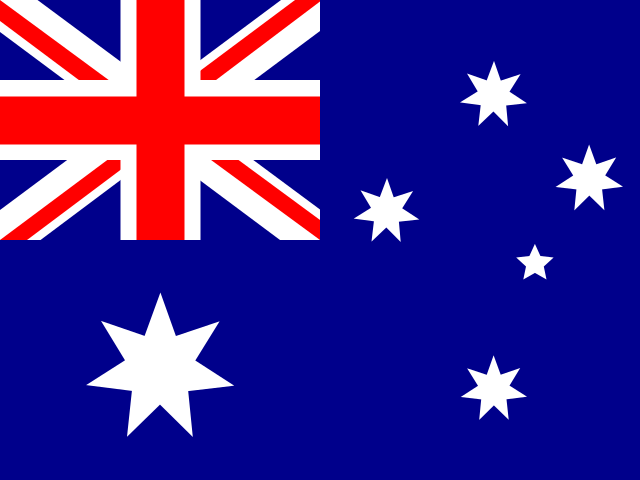 Australia Australia | Canberra | 27,600,000 |
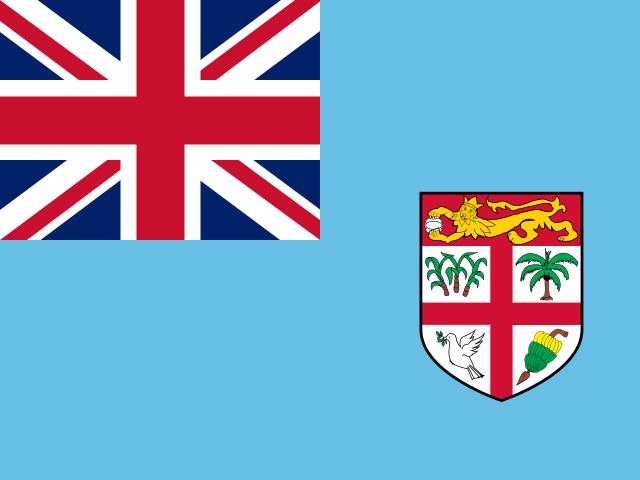 Fiji Fiji | Suva | 933,000 |
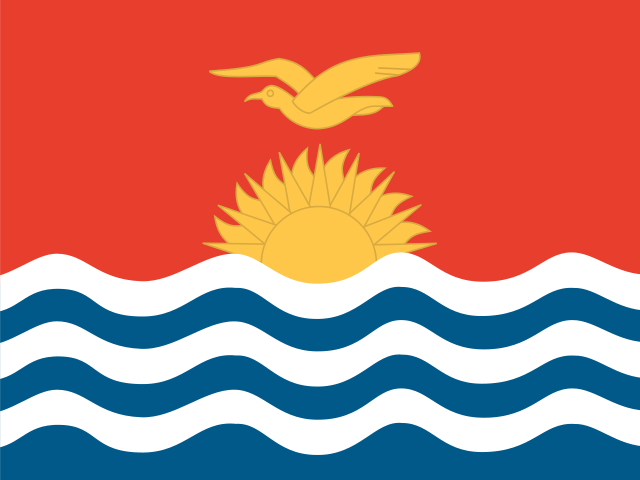 Kiribati Kiribati | South Tarawa | 136,000 |
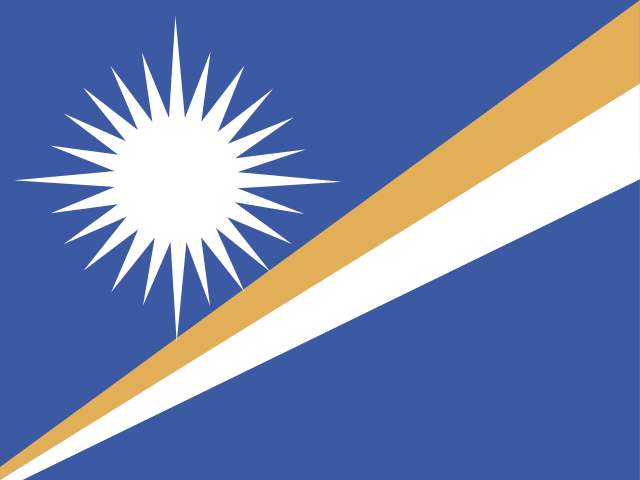 Marshall Islands Marshall Islands | Majuro | 36,000 |
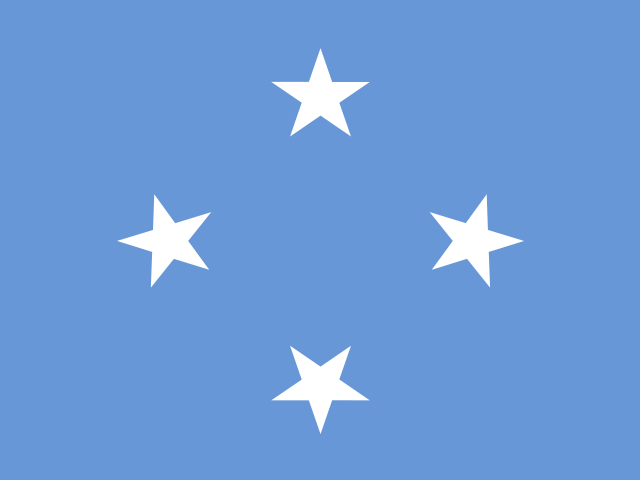 Micronesia Micronesia | Palikir | 114,000 |
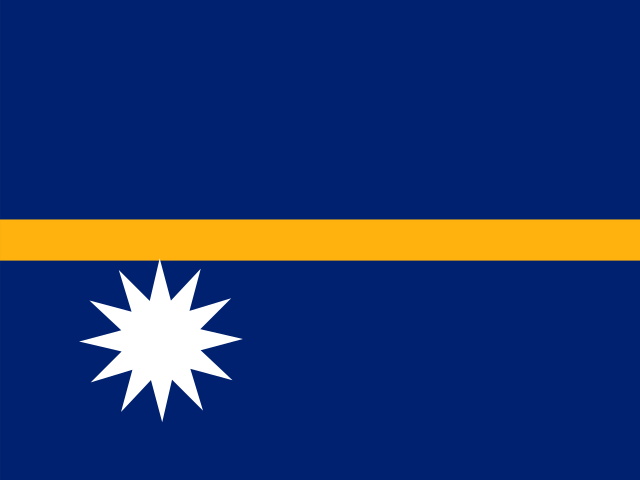 Nauru Nauru | Yaren | 12,000 |
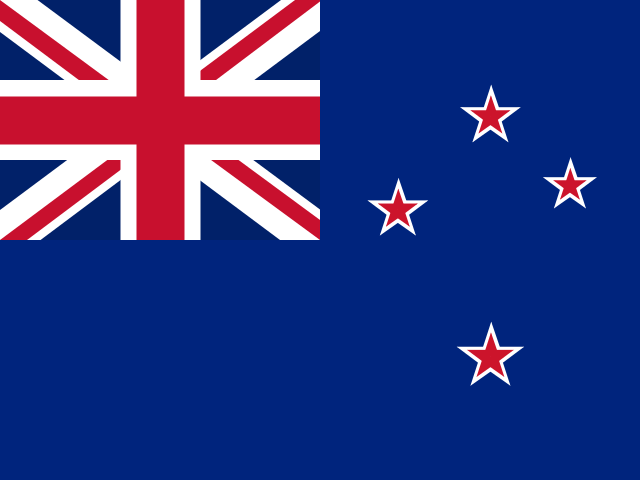 New Zealand New Zealand | Wellington | 5,320,000 |
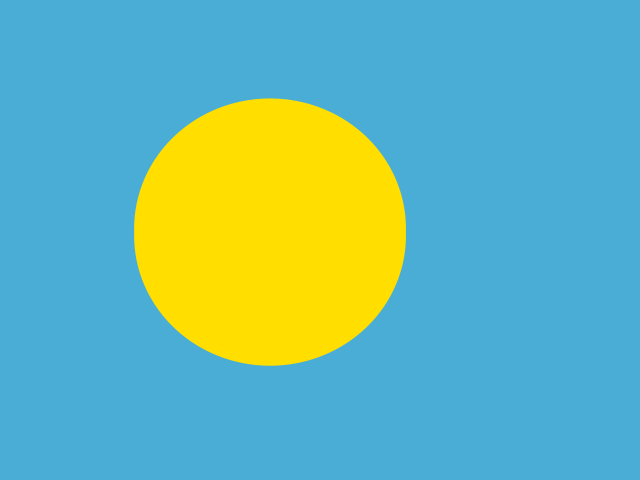 Palau Palau | Ngerulmud | 18,000 |
 Papua New Guinea Papua New Guinea | Port Moresby | 10,800,000 |
 Samoa Samoa | Apia | 219,000 |
 Solomon Islands Solomon Islands | Honiara | 839,000 |
 Tonga Tonga | Nuku'alofa | 104,000 |
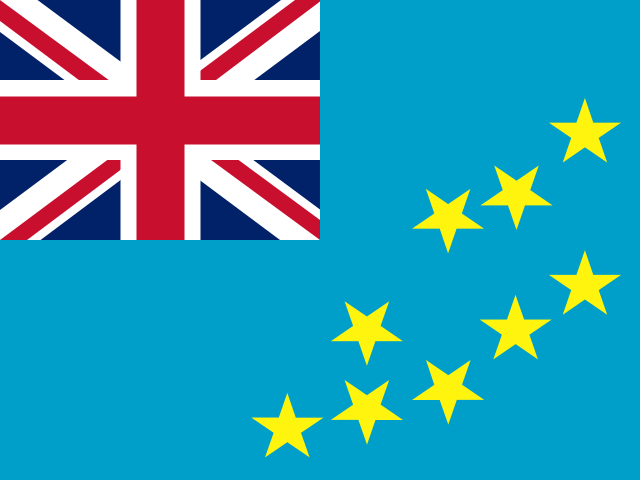 Tuvalu Tuvalu | Funafuti | 9,492 |
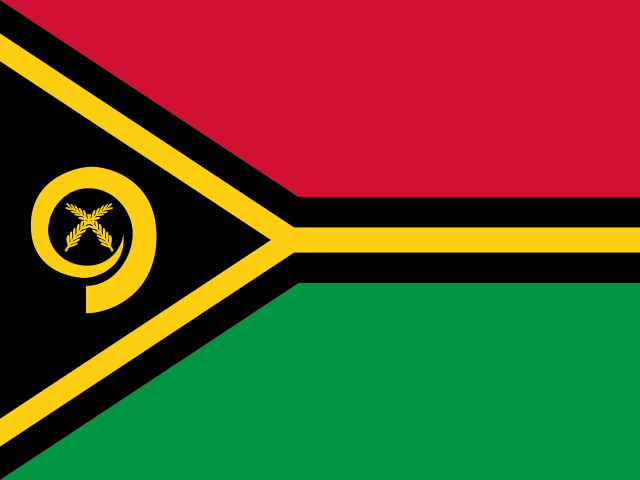 Vanuatu Vanuatu | Port Vila | 335,000 |
Continent, region, or vibe?
Oceania needs a definitional paragraph more than most, because it isn’t a continent in the classic landmass sense. The continent is Australia; Oceania is the standard regional grouping that wraps Australia together with New Zealand, Melanesia, Micronesia, and Polynesia, and it’s what the UN, and this site, use for counting. So Australia is the only country that is also (roughly) its own continent, and simultaneously just one of Oceania’s 14. Both statements are true, which is why the question trips people.
The roster: Australia and New Zealand; Papua New Guinea, Solomon Islands, Vanuatu, and Fiji in Melanesia; Palau, Micronesia, the Marshall Islands, Nauru, and Kiribati across Micronesia; Samoa, Tonga, and Tuvalu in Polynesia. Papua New Guinea shares its island with Indonesia, making that border the region’s only major land crossing, and PNG brings the continent a world record: about 840 living languages, more than any country anywhere.
The land of microstates
Nowhere concentrates tiny sovereignty like the Pacific. Nauru, at about 21 km², is the world’s smallest island nation and its smallest republic, a single raised coral speck with no official capital city, just a district where government happens. Tuvalu’s nine atolls total around 26 km² and hold one of the smallest national populations on the planet; it trades places with Nauru at the bottom of the tables. Palau, the Marshall Islands, and Kiribati aren’t much bigger in land terms while commanding oceanic zones of staggering size; Kiribati alone straddles the equator and reaches across the International Date Line. Several of these states are also on the front line of sea-level rise, which gives the “smallest countries” trivia an increasingly serious edge.
The ones that fool you
The Pacific’s territories outnumber its countries, and they’re dressed convincingly: French Polynesia (Tahiti) and New Caledonia are French; Guam, American Samoa, and the Northern Marianas are American; the Cook Islands and Niue run their own affairs in free association with New Zealand without UN membership. Hawaii gets mistaken for a country and is a US state. None of them count toward the 14, and all of them show up as decoys on a good Oceania map quiz, which handles the honest version of finding all 14. Their little flags star in the flags of the world reference too.
Frequently asked questions
Is Oceania the same as Australia?
No. Australia is one country (and the name of the continent); Oceania is the wider region of 14 countries that quizzes and the UN actually count. When someone asks how many countries are “in Australia,” the charitable answer is one, and the useful answer is this page.
What’s the smallest country in Oceania?
Nauru, at roughly 21 km², which also makes it the smallest island country and smallest republic in the world. Only Vatican City and Monaco are smaller overall, as the smallest countries list shows, and both of those are European city-states rather than islands.
Is New Zealand part of Australia?
No, and New Zealanders would like that noted permanently. It’s a separate country over 1,500 km away across the Tasman Sea, part of Polynesia in regional terms. The two share a flag-confusion problem, though: both fly the Southern Cross on blue with a Union Jack corner.
Why does Oceania’s count differ between sources?
Free-association states are the culprits: the Cook Islands and Niue govern themselves under a compact with New Zealand and are recognized by some bodies without holding UN membership. Counts that include them run higher than the UN-member figure of 14 used across this site.