How Many Countries Are in South America? (2026)
South America has 12 countries, counting UN member states, the smallest roster of any inhabited continent. It’s the one continental count most people can actually recite in full, and it still hides a couple of technicalities worth having in your pocket.
| Country | Capital | Population |
|---|---|---|
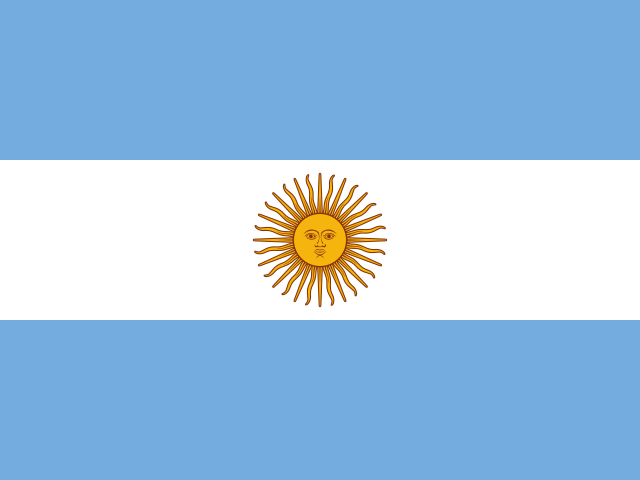 Argentina Argentina | Buenos Aires | 45,900,000 |
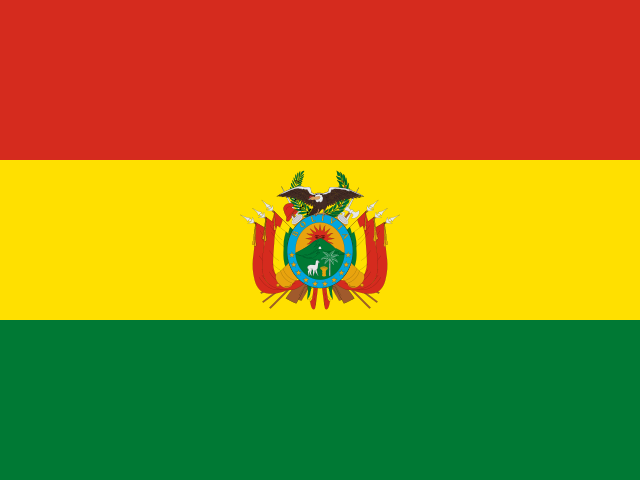 Bolivia Bolivia | Sucre, La Paz | 12,600,000 |
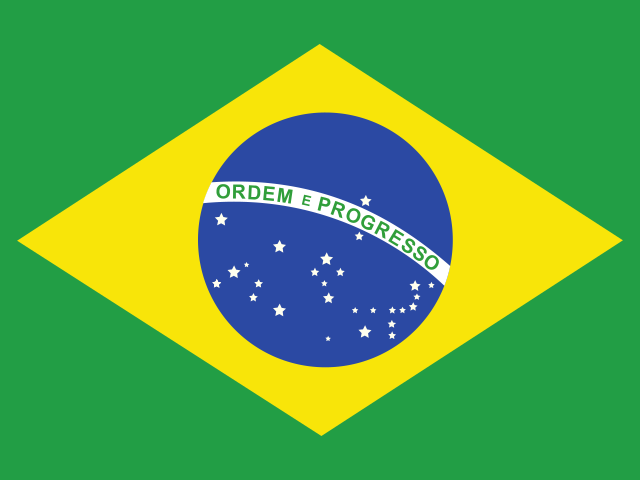 Brazil Brazil | Brasília | 212,800,000 |
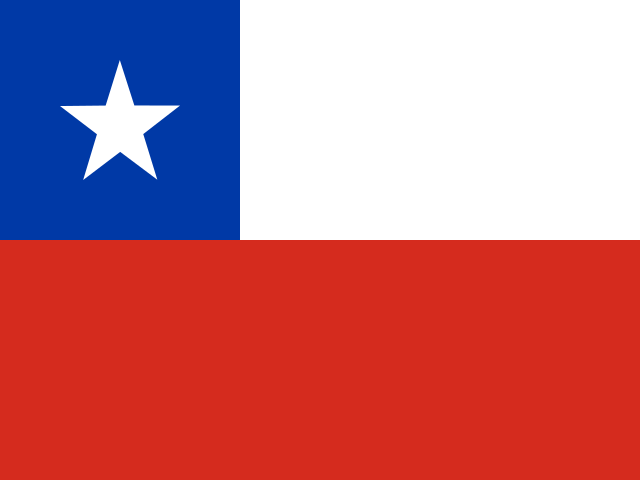 Chile Chile | Santiago | 19,900,000 |
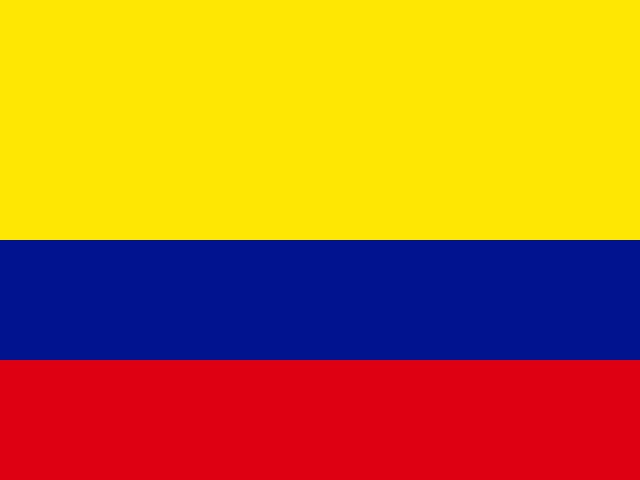 Colombia Colombia | Bogotá | 53,400,000 |
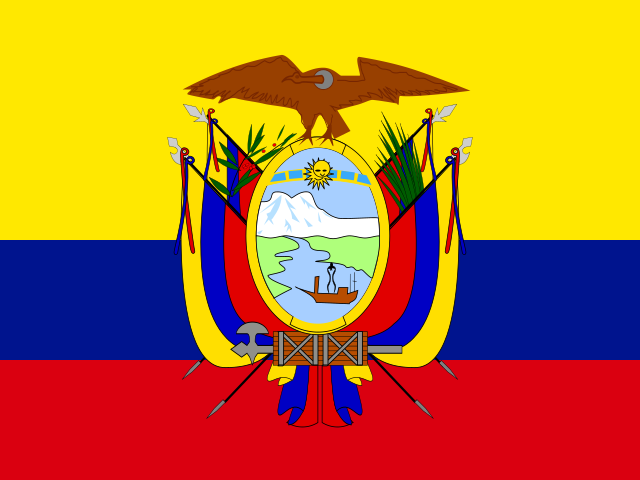 Ecuador Ecuador | Quito | 18,300,000 |
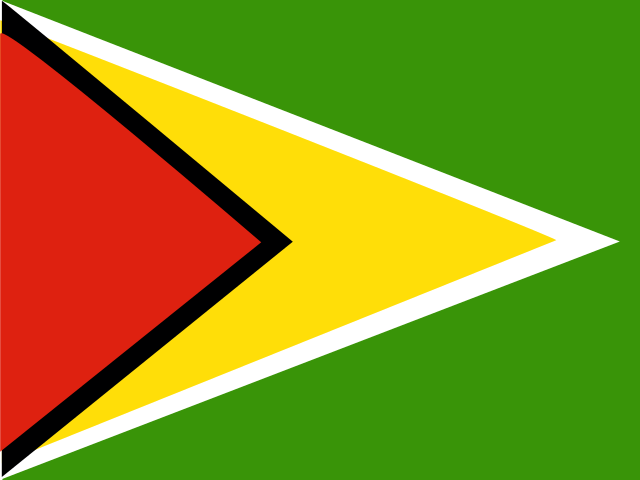 Guyana Guyana | Georgetown | 836,000 |
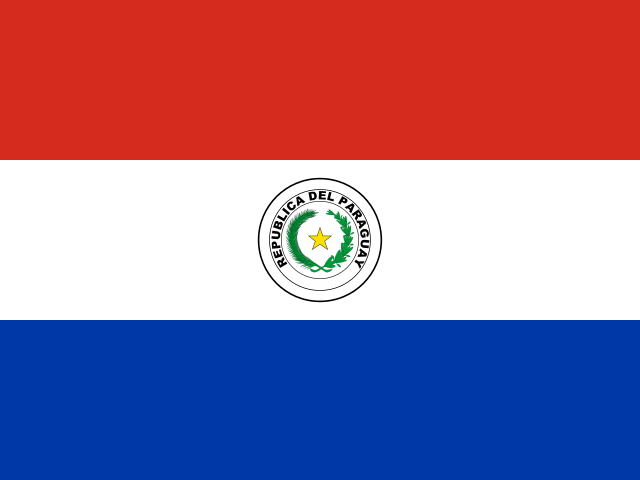 Paraguay Paraguay | Asunción | 7,010,000 |
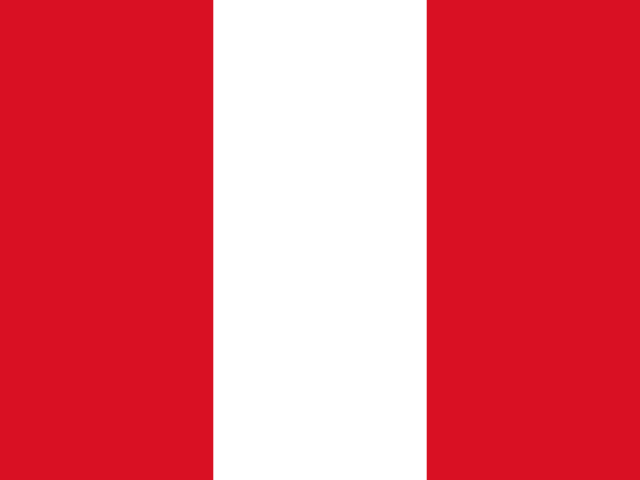 Peru Peru | Lima | 34,600,000 |
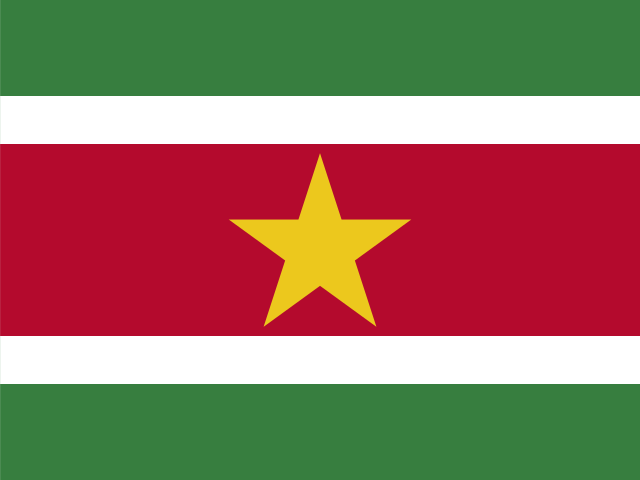 Suriname Suriname | Paramaribo | 640,000 |
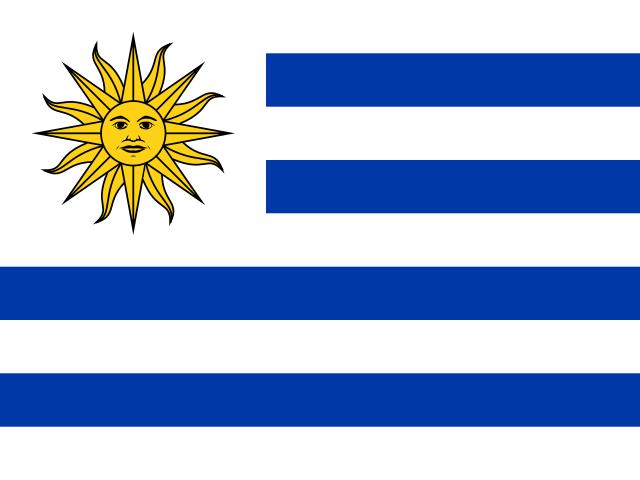 Uruguay Uruguay | Montevideo | 3,380,000 |
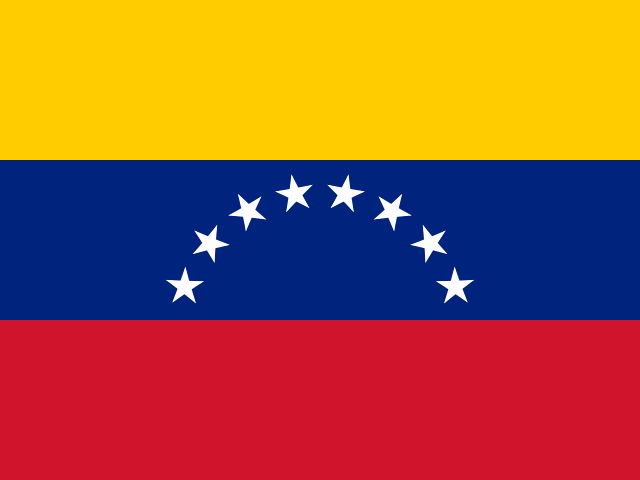 Venezuela Venezuela | Caracas | 28,500,000 |
The full roster, briefly
Brazil dominates, holding roughly half the continent’s land and people; it borders every South American country except two, Chile and Ecuador, which is a lovely trivia fact hiding in plain sight. Around it: Argentina, Chile, Uruguay, and Paraguay in the south; Bolivia and Peru in the Andean middle; Colombia, Venezuela, Ecuador along the north and west; and the two small ones on the northeastern shoulder, Guyana and Suriname. Suriname is the continent’s smallest country at 163,820 km², and the pair are the ones that go missing when people count from memory.
Bolivia and Paraguay share a distinction: the continent’s only two landlocked countries, both having lost their sea access in 19th-century wars. Everyone else touches an ocean.
The French twist and other fine print
Look at the map’s northeastern shoulder and you’ll see three similar-sized territories, but only two are countries. The third, French Guiana, is France, not a colony or a dependency but an actual overseas department of the French Republic, using the euro and launching European Space Agency rockets from Kourou. It’s the largest piece of the EU outside Europe, and the reason “how many countries in South America” catches people who count shapes on a map instead of sovereign states.
The other fine print sits offshore. The Falkland Islands are a British territory claimed by Argentina, not an independent country. And at the continent’s northern tip, Trinidad and Tobago sits just off Venezuela’s coast yet counts as Caribbean, putting it in North America’s total under the UN scheme. Continental edges are never quite where the map suggests.
With just 12 countries, this is the continent to master completely, and quickly: the South America map quiz handles locations in a sitting, the South America capitals quiz adds Bolivia’s double-capital quirk, and the South America flag quiz explains why three of the flags look suspiciously related.
Frequently asked questions
Which South American country do people always forget?
Suriname first, Guyana second. Small, quiet, and tucked beside a French territory that visually blends with them, they’re the standard omissions when someone counts the continent from memory. They’re also each interesting: Suriname is the smallest country on the continent, and Guyana the only English-speaking one.
Is French Guiana a country?
No. It’s an overseas department of France, as French as Normandy in legal terms, which is why the EU’s longest external land border is actually in South America, shared with Brazil. Any count that includes French Guiana as a country is quietly wrong.
Why isn’t Trinidad and Tobago counted in South America?
Proximity isn’t classification. The islands sit only a few kilometers off Venezuela, but the UN groups Trinidad and Tobago with the Caribbean, which falls under North America’s regional total of 23. It’s a favorite edge case in continent-sorting quizzes for exactly this reason.
Is South America the easiest continent to learn completely?
Yes, and it’s not close: 12 countries with distinctive shapes and clean borders, against Africa’s 54 or Asia’s 46. Full mastery, locations, capitals, and flags, is a weekend project, and the confidence it builds carries into every harder continent.